Lord Voldemort
Lord Voldemort, born Tom Marvolo Riddle, is the central antagonist of the Harry Potter series, a wizard of unparalleled dark power whose quest for immortality and absolute control defines the conflict of the narrative. In Harry Potter and the Half-Blood Prince, his past is systematically uncovered, revealing the origins of his evil, the mechanics of his survival, and the intricate plot that leads to the death of his greatest foe, Albus Dumbledore. His presence, even when offstage, drives the entire plot, from the political turmoil in the Muggle and wizarding governments to the personal fears and missions of every major character.
Origins and the Making of a Dark Lord
Voldemort's story begins in tragedy and cruelty. He was born Tom Marvolo Riddle on December 31st to Merope Gaunt, a witch from the impoverished and violent Gaunt family, who died shortly after his birth in a Muggle orphanage. His father, Tom Riddle Sr., a handsome Muggle, had abandoned Merope when she stopped giving him a love potion. Growing up in Wool's Orphanage, the young Tom Riddle was a strange, secretive boy who discovered he could make things happen without trying, using his powers to frighten and punish other children. He stole from them and hoarded trophies, showing an early propensity for cruelty and control. When Albus Dumbledore visited him to offer a place at Hogwarts, Riddle was initially suspicious, believing Dumbledore to be from an asylum, but his reaction upon learning he was a wizard was one of wild, almost bestial happiness. He immediately demanded proof and, upon seeing Dumbledore set his wardrobe on fire and extinguish it, his expression turned greedy. He was already using Parseltongue, the language of snakes, a rare and dark ability. Dumbledore observed that Riddle was already highly self-sufficient, secretive, and friendless, preferring to operate alone, a trait he would carry into adulthood. He showed contempt for anything that tied him to other people, even his own common first name, and soon shed it to create the mask of "Lord Voldemort."
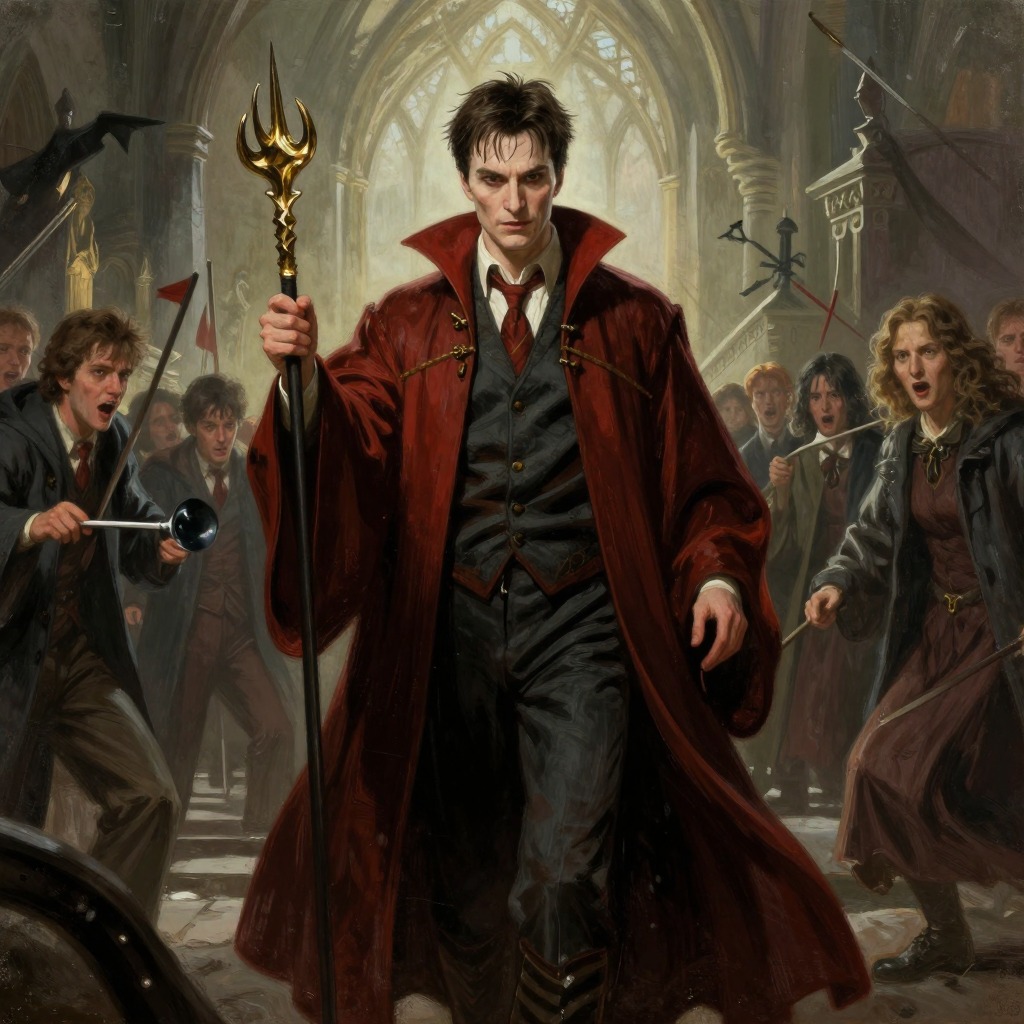
At Hogwarts, Riddle was a model student: handsome, polite, and brilliant, charming most of his teachers. He was sorted into Slytherin House and gathered around him a group of followers who were the forerunners of the Death Eaters. He was obsessed with his parentage, eventually discovering his mother's family, the Gaunts, and learning of his descent from Salazar Slytherin. In his sixth year, he tracked down his uncle, Morfin Gaunt, at the Gaunt family hovel. There, he stole Marvolo Gaunt's ring and Morfin's wand, then crossed the valley to the Riddle House and murdered his Muggle father and grandparents. He framed Morfin for the murders by implanting a false memory, a crime for which Morfin was sent to Azkaban. After leaving Hogwarts, Voldemort first applied for a teaching post in Defense Against the Dark Arts but was refused by Headmaster Armando Dippet. He then took a job at Borgin and Burkes, a shop dealing in Dark artifacts, where he was sent to persuade wealthy witches and wizards to part with their treasures. He used this position to murder Hepzibah Smith, stealing Hufflepuff's cup and Slytherin's locket, two objects he would later turn into Horcruxes. Years later, he returned to Hogwarts to again request the Defense Against the Dark Arts post, this time from Dumbledore, who had become headmaster. Dumbledore refused, and Voldemort left in rage, placing a jinx on the position that ensured no teacher would hold it for more than a year.
The Creation of Horcruxes and the Path to Immortality
The central revelation of the book is Voldemort's method of achieving immortality: the creation of Horcruxes. In a crucial memory obtained by Harry from Professor Horace Slughorn, a teenage Tom Riddle is seen asking Slughorn about Horcruxes. Slughorn explains that a Horcrux is an object in which a wizard conceals a part of their soul, achieved by committing murder, the supreme act of evil, which rips the soul apart. Riddle, his hunger for knowledge apparent, then asks the key question: "Wouldn't it be better, make you stronger, to have your soul in more pieces... isn't seven the most powerfully magical number?" This question horrifies Slughorn, who realizes the depth of Riddle's ambition. Dumbledore deduces that Voldemort intended to create a seven-part soul, with six Horcruxes and the seventh piece remaining in his body. By the time of the story, two Horcruxes have been destroyed: Tom Riddle's diary, which Harry destroyed in his second year, and Marvolo Gaunt's ring, which Dumbledore destroyed, though the ring carried a terrible curse that withered his hand. Dumbledore believes the remaining Horcruxes are Hufflepuff's cup, Slytherin's locket, and Nagini, Voldemort's snake, with a possible sixth being an object from Ravenclaw or Gryffindor. This pursuit of immortality through soul-splitting is the core of Voldemort's evil, making him less human with each murder and driving the central quest of the narrative.
The Plot Against Dumbledore and the Final Confrontation
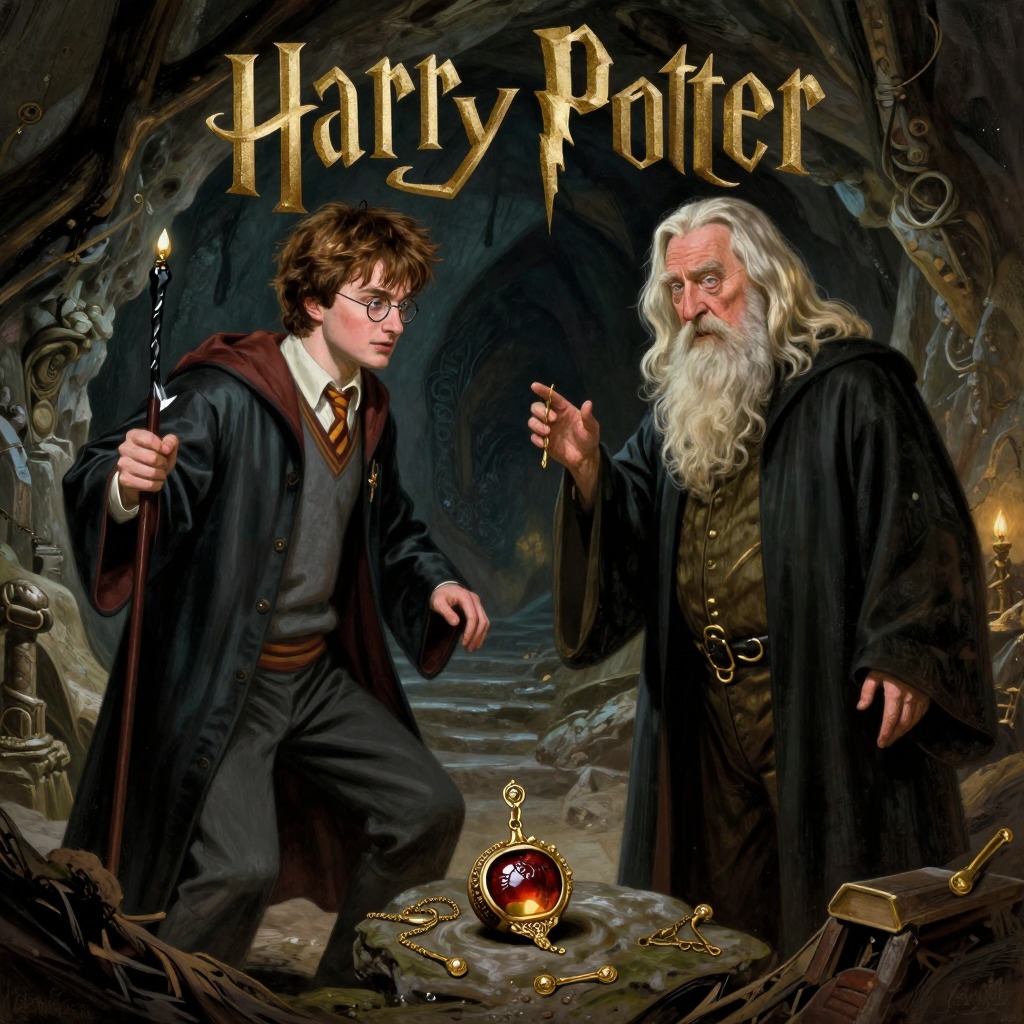
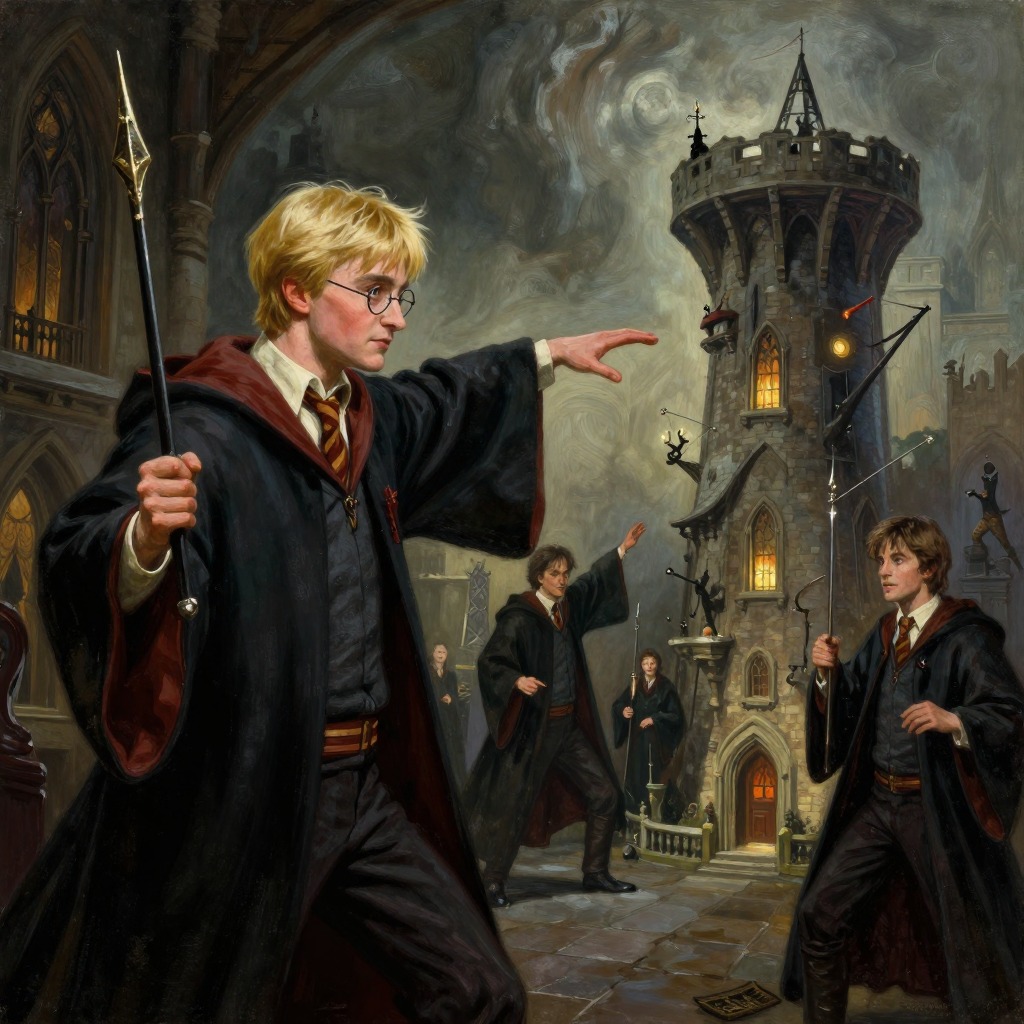
Throughout the book, Voldemort operates through his agents, primarily Draco Malfoy, whom he tasks with killing Albus Dumbledore as a punishment for Lucius Malfoy's failures. Voldemort's plan is intricate and ruthless. He forces Draco to attempt the murder, knowing it is likely a suicide mission, and uses the threat of death against Draco and his family to ensure compliance. Draco's attempts are clumsy—a cursed necklace and poisoned mead—but they reveal Voldemort's reach and his willingness to sacrifice anyone. The plan culminates on the night Dumbledore and Harry return from the cave where they retrieved a fake Horcrux. The Dark Mark is cast over the Astronomy Tower, luring Dumbledore to his death. Draco confronts Dumbledore, but cannot bring himself to kill him. It is Severus Snape, bound by an Unbreakable Vow to Narcissa Malfoy, who ultimately casts the Killing Curse, killing Dumbledore and fulfilling Voldemort's command. This act solidifies Voldemort's power and plunges the wizarding world into open war.
The Prophecy and Harry's Destiny
Voldemort's actions are fundamentally shaped by a prophecy made by Sybill Trelawney, which he overheard through his spy, Severus Snape. The prophecy stated that a boy born at the end of July, whose parents had thrice defied Voldemort, would be born with the power to vanquish him. Voldemort, believing the prophecy referred to Harry Potter, marked him as his equal by attacking him as a baby. This act inadvertently gave Harry a powerful protection and a connection to Voldemort himself. Dumbledore explains to Harry that the prophecy does not force him to act; rather, it is Voldemort's own belief in it that makes it self-fulfilling. Harry's power, Dumbledore argues, is not a magical weapon but his ability to love, a power Voldemort, who has mutilated his own soul, can never understand or possess. The prophecy's core statement, "Neither can live while the other survives," sets the stage for the final, inevitable confrontation between Harry and Voldemort.
Thematic Significance and Legacy
Lord Voldemort represents the ultimate corruption of power and the rejection of humanity. His fear of death drives him to commit unspeakable acts, tearing his soul apart in a desperate attempt to cling to life. He is a tyrant who creates his own worst enemy, as Dumbledore points out, by singling out Harry and giving him the tools for the job. Voldemort's inability to understand love, sacrifice, and loyalty is his greatest weakness. He commands through fear and manipulation, but his followers are motivated by self-interest and terror, not genuine devotion. His death at the hands of Harry is not just a physical defeat but a moral one, a triumph of a whole, loving soul over a fragmented, evil one. His legacy is one of destruction and fear, but also of the resilience of those who oppose him, proving that even in the face of ultimate evil, courage and love can prevail.